EmpowHer
Game Design
UX Research
Social Impact
A board game for grades 5–8 in rural India, teaching menstrual health and body safety through play.
Background
In India, discussions around menstrual health and body safety are often limited, particularly among young students in rural and semi-urban areas. This leads to a lackof awareness and confidence among adolescents as they navigate these critical topics.
Approach
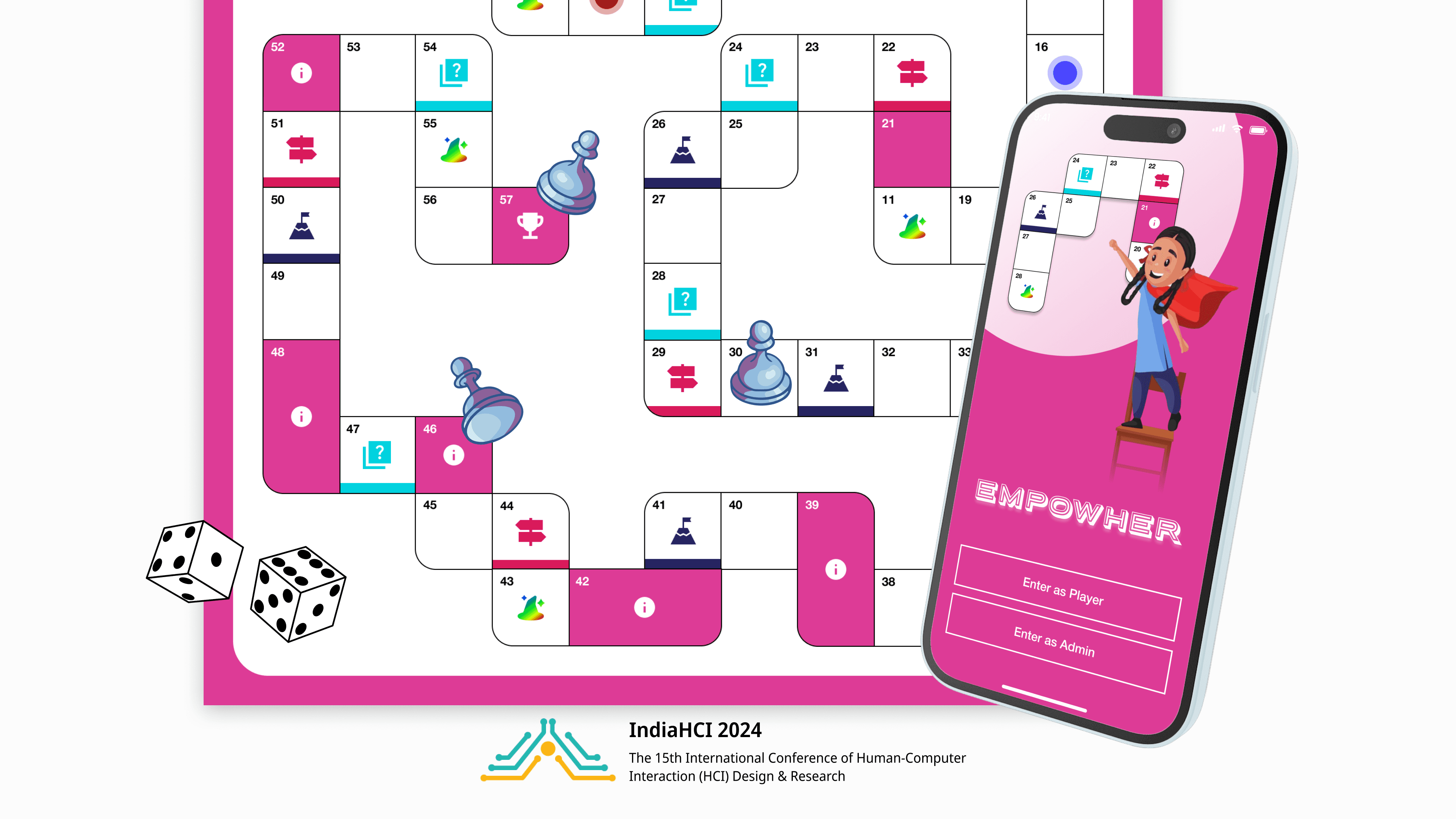
Recognizing this, we developed EmpowHer, a board game designed to complement the school curriculum for students in grades 5 to 8, focusing on menstrual health and understanding safe vs. unsafe touch. The game serves as an interactive supplement to a structured curriculum, providing a hands-on, practical approach to sensitive topics.
By blending academic learning with engaging gameplay, EmpowHer enables students to apply what they’ve learned in real-world contexts.
Impact
🏆
IndiaHCI 2024
15th International Conference on HCI Design & Research
HCI for Social Good · Game Design Track
Jump to Solution
Overview
Client: Highway
Timeline: Fall 2024
Tools Used
Adobe Illustrator · Figma
Role
Game Designer · Instructional Designer · UX Designer
Methods
Contextual Inquiry, Platform Audit, Usability Testing
Project Context
2 Members,
Problem
The problem worth solving
In India, menstrual health and body safety are rarely discussed in schools, especially in rural and semi-urban areas. Young students lack the awareness and confidence to navigate these topics.
EmpowHer was designed to change that — a board game that complements existing school curriculum for grades 5–8, making sensitive topics approachable through play.
Goals
What we set out to do

Enhance Awareness
Reduce stigma around menstrual health and safe touch.

Encourage Dialogue
Open up taboo conversations in a safe setting.

Practical Understanding
Practice real-life decisions through scenarios.

Behavioral Change
Build safe habits around hygiene and boundaries.
Challenges
What made this hard
The mental model showed us that these weren't edge cases, they were patterns. The same three breakdowns showed up regardless of who was vetting or where they were in the workflow. Each one pointed to a specific question we had to answer before we could design anything.
Taboos & Cultural Sensitivities
Engaging Young Learners
Scalability Across Languages
No Internet in Rural Areas
Logistics of Field Testing
Research
How we built knowledge
Secondary: Government of India's National Health Mission data — identifying gaps in menstrual health infrastructure and resources across schools.
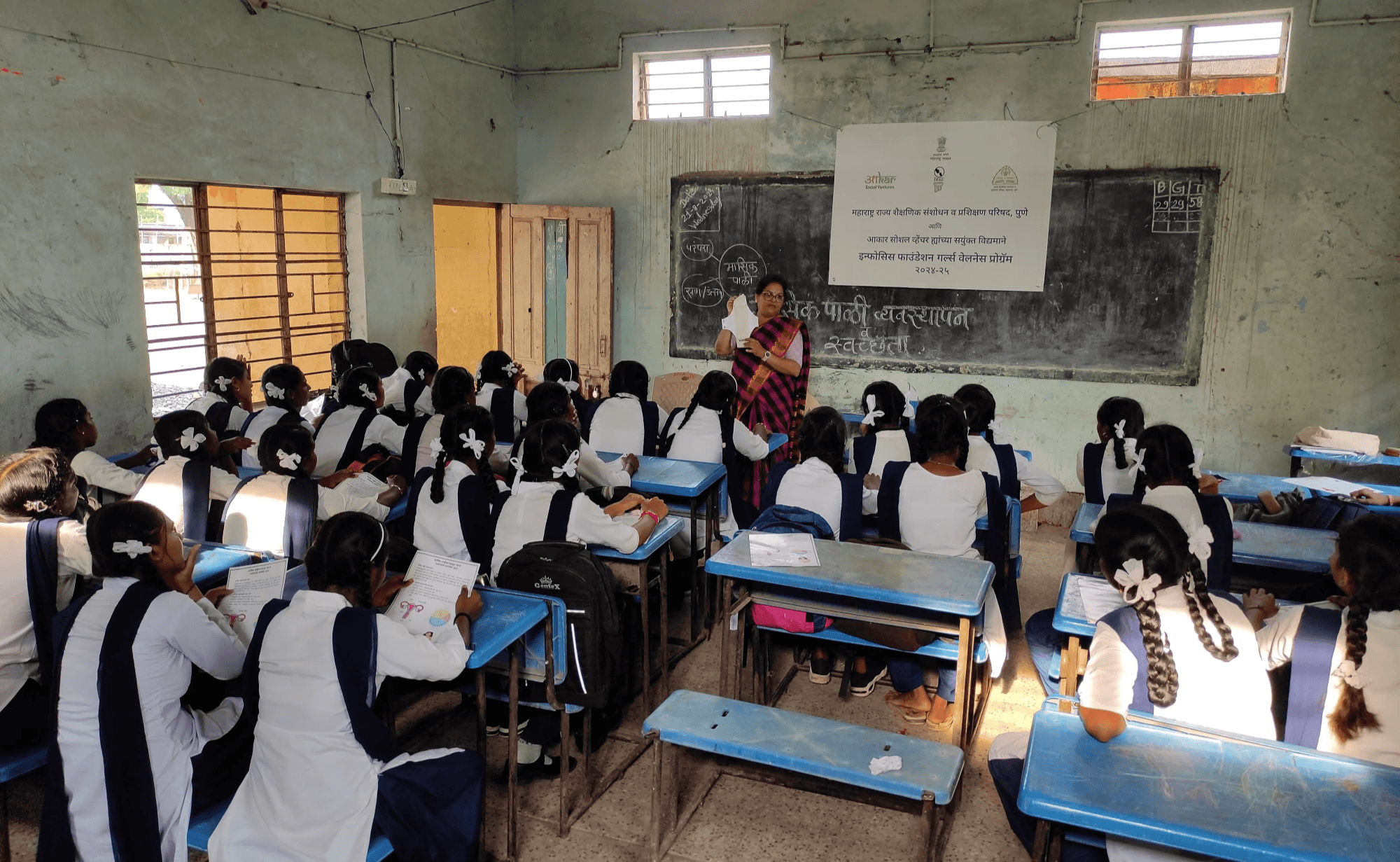
Primary: On-field interviews with teachers and supervisors at Zilla Parishad Schools across Maharashtra — understanding real classroom dynamics and cultural nuances.
Sources: Menstrual Hygiene Scheme · National Rural Health Mission · Menstrual Hygiene Management Among Adolescent Schools
Value Proposition
24 sessions · 1 academic year
One "self-awareness" class every 2 weeks — structured so students don't just receive information, but practice applying it.
First Half
Theory
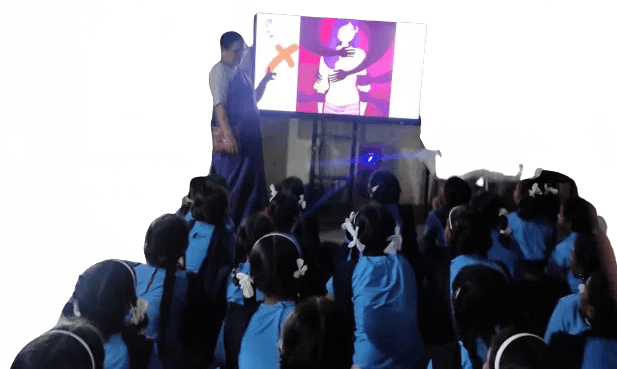
Students learn through a guidebook — menstrual health, safe vs. unsafe touch.
Second Half
Play
The EmpowHer board game reinforces that knowledge through real-scenario gameplay.
Game Mechanics
Roll. Land. Learn.
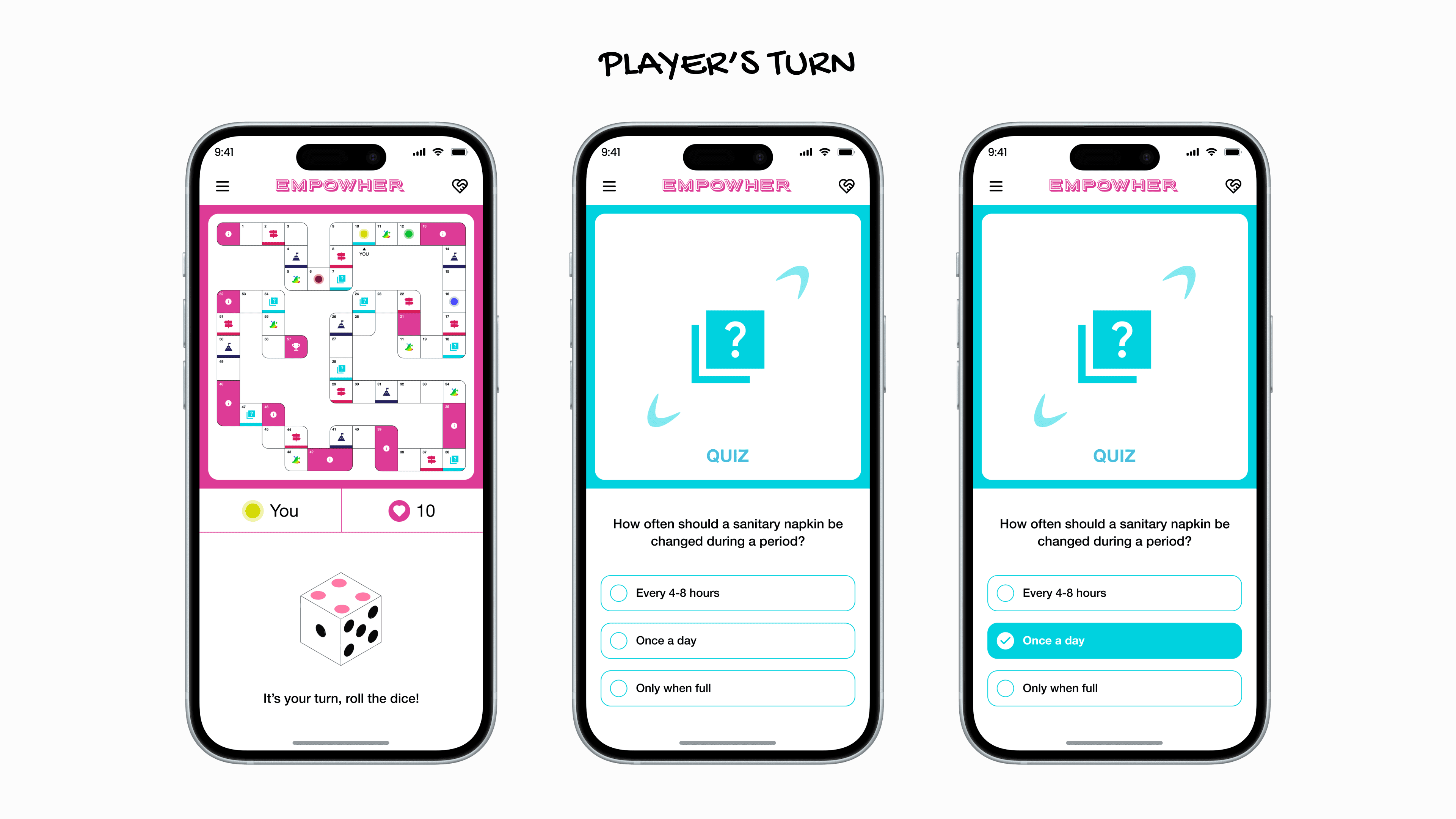
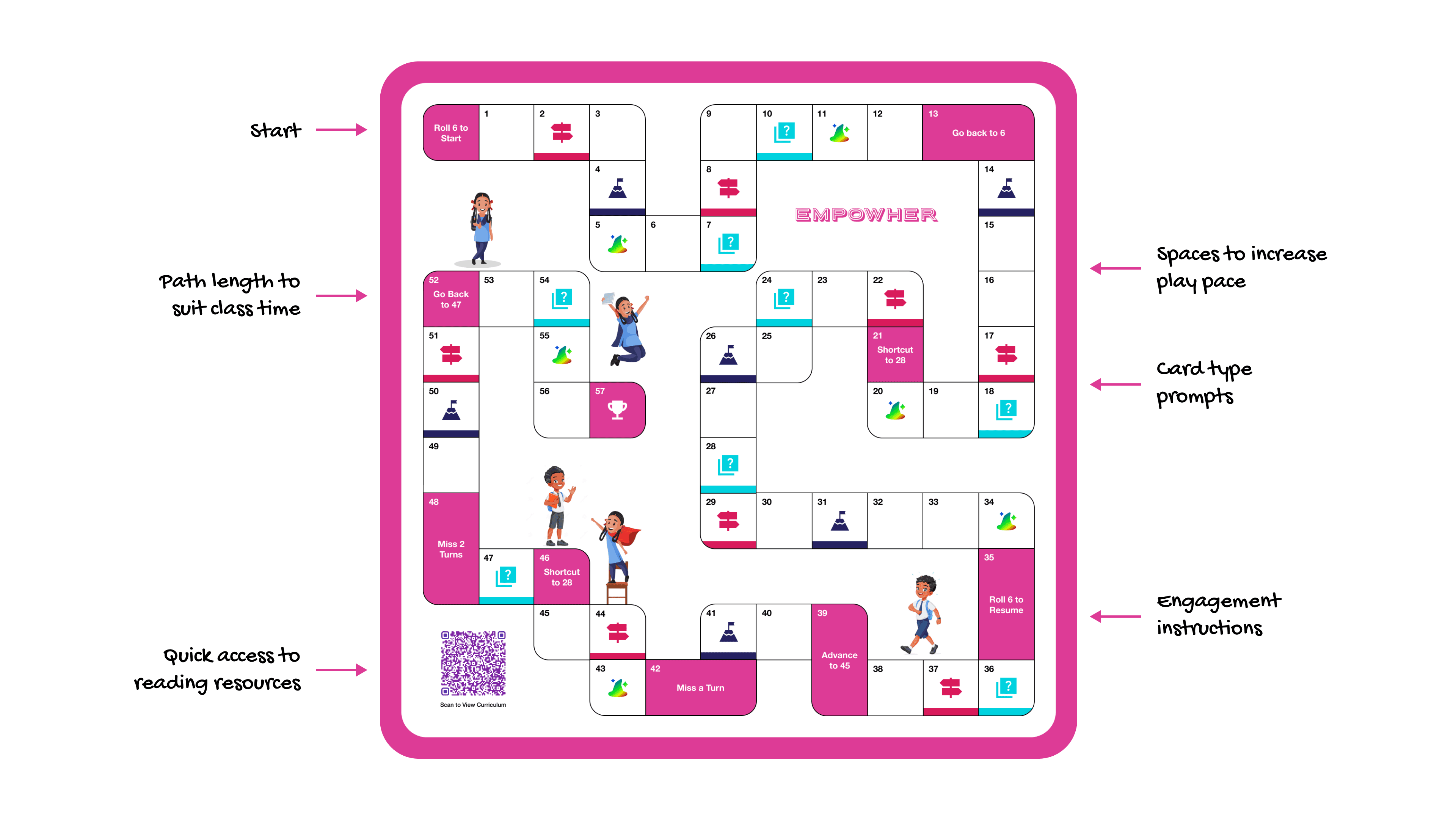
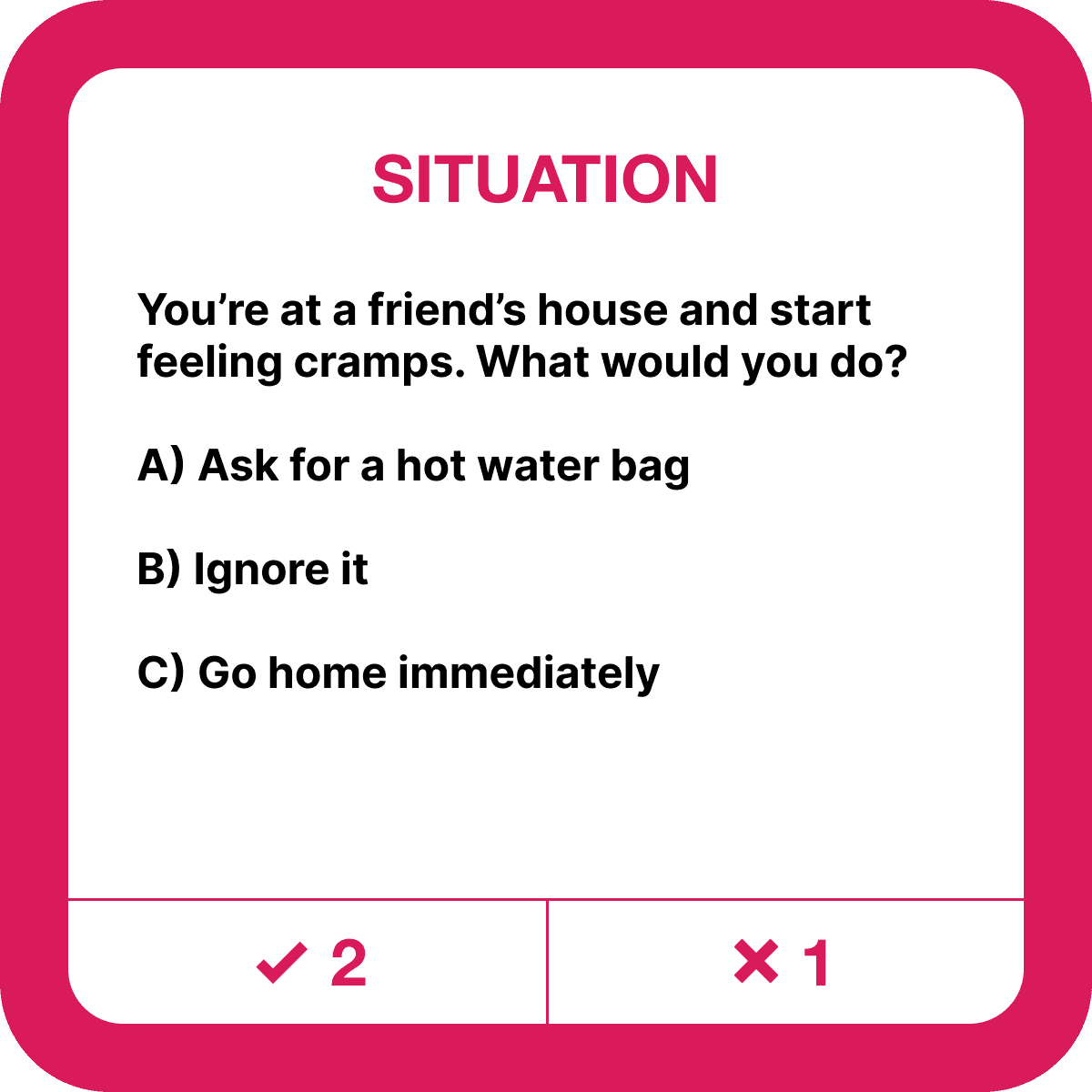
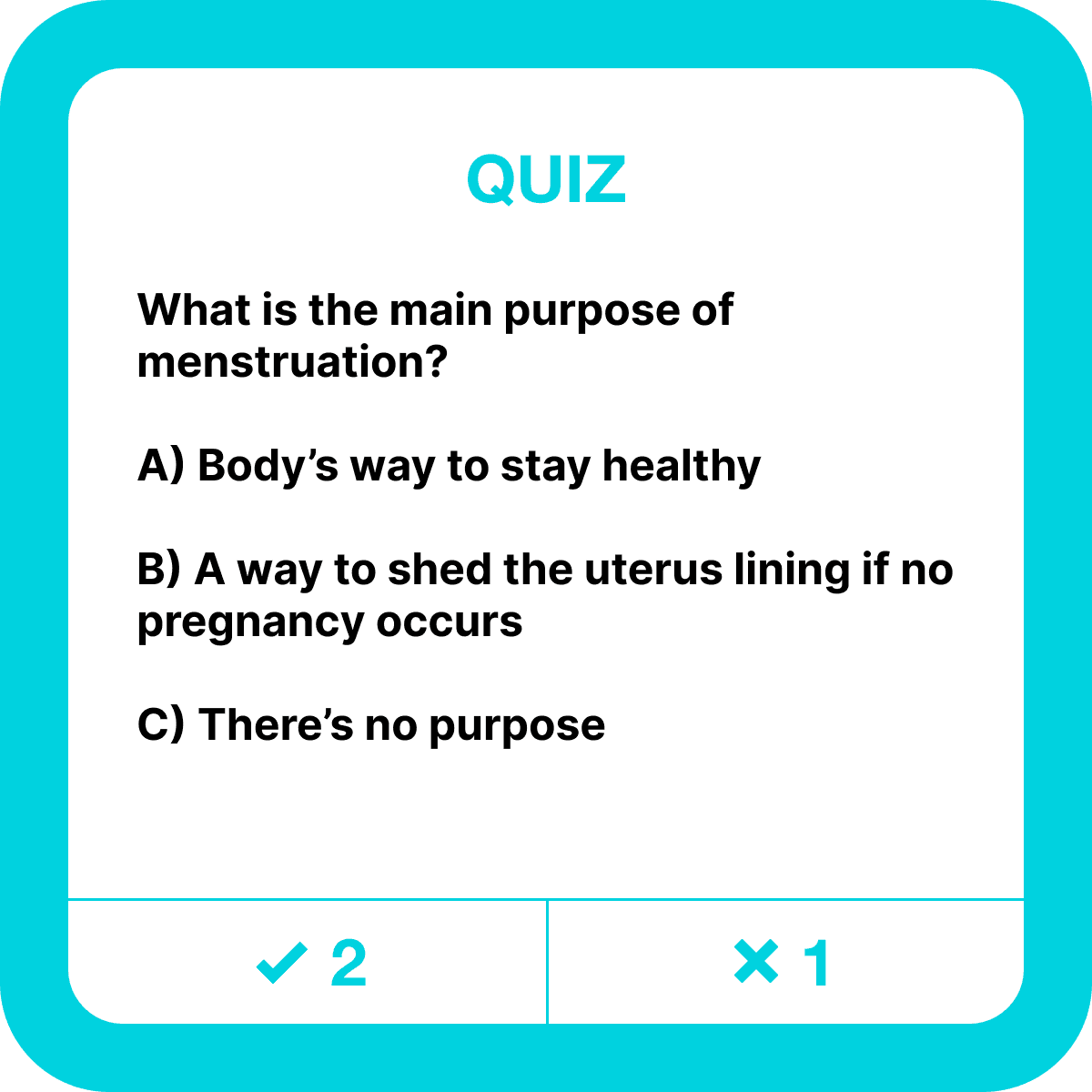
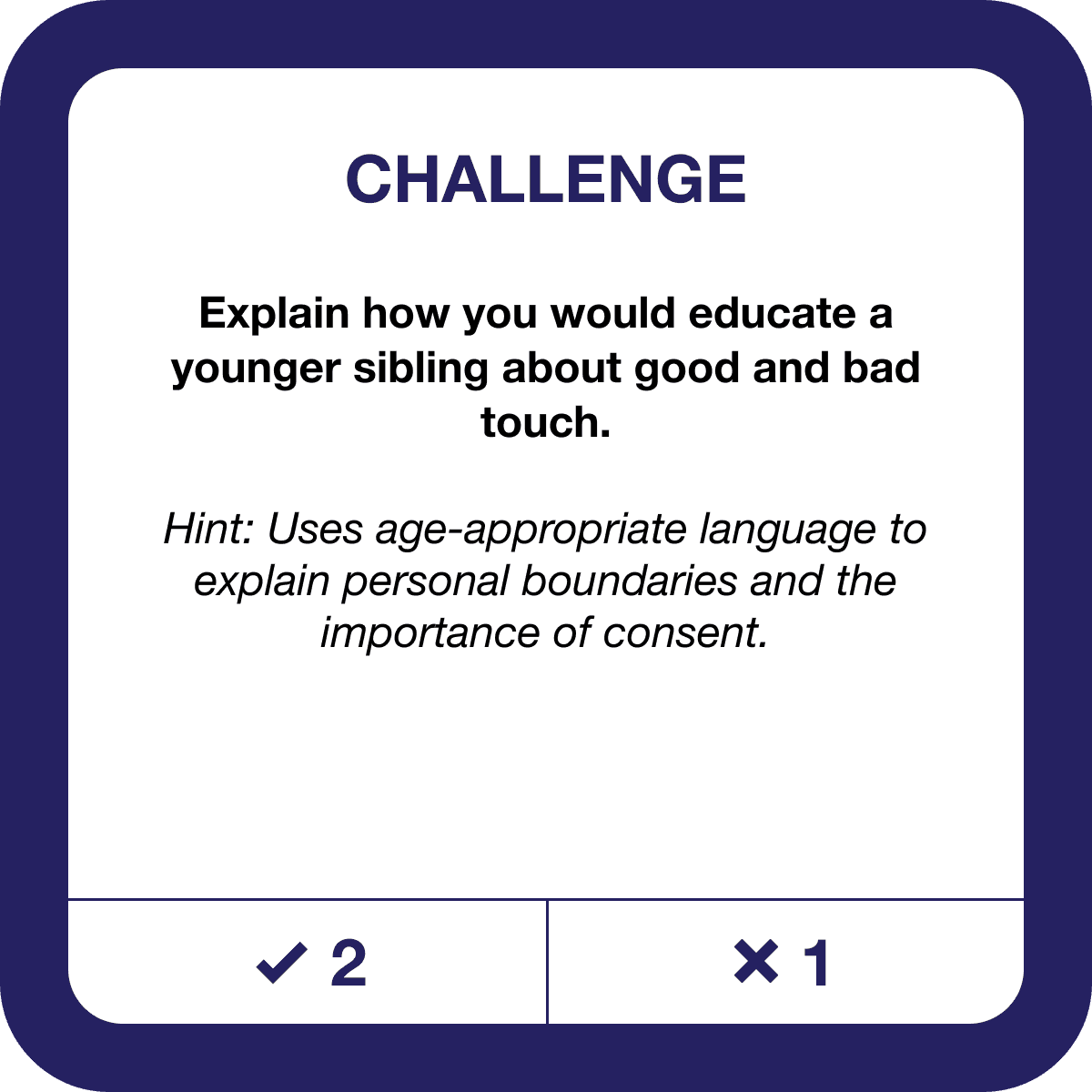
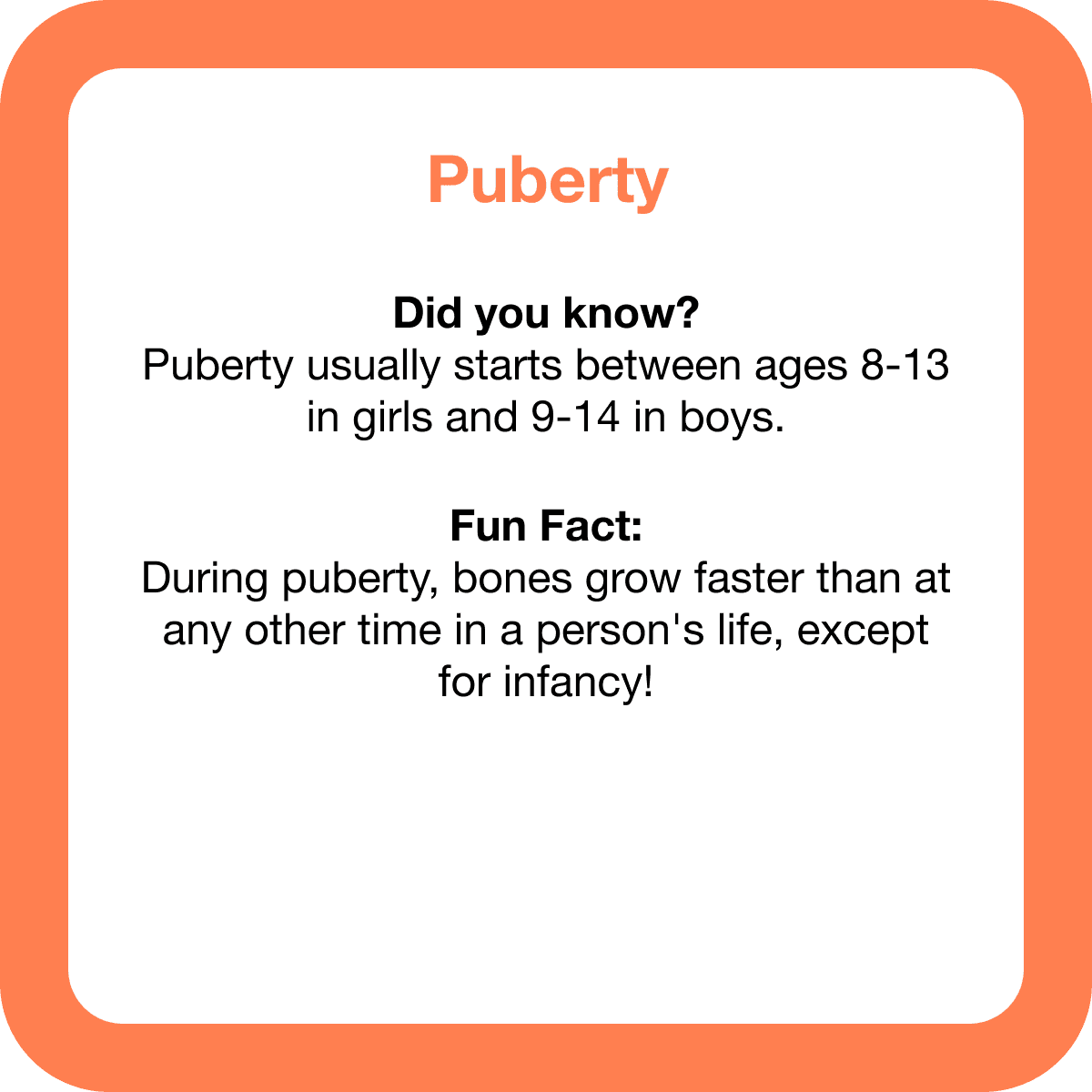
Students roll a dice, move across the board, and draw from one of four card types — each targeting a different kind of learning.
Situation
Real-life scenarios — choose the right response.
Quiz
Multiple-choice to reinforce curriculum knowledge.
Challenge
Teacher-moderated tasks for applied learning.
Wild
Myth-busting facts to keep engagement alive.
Digital Scalability
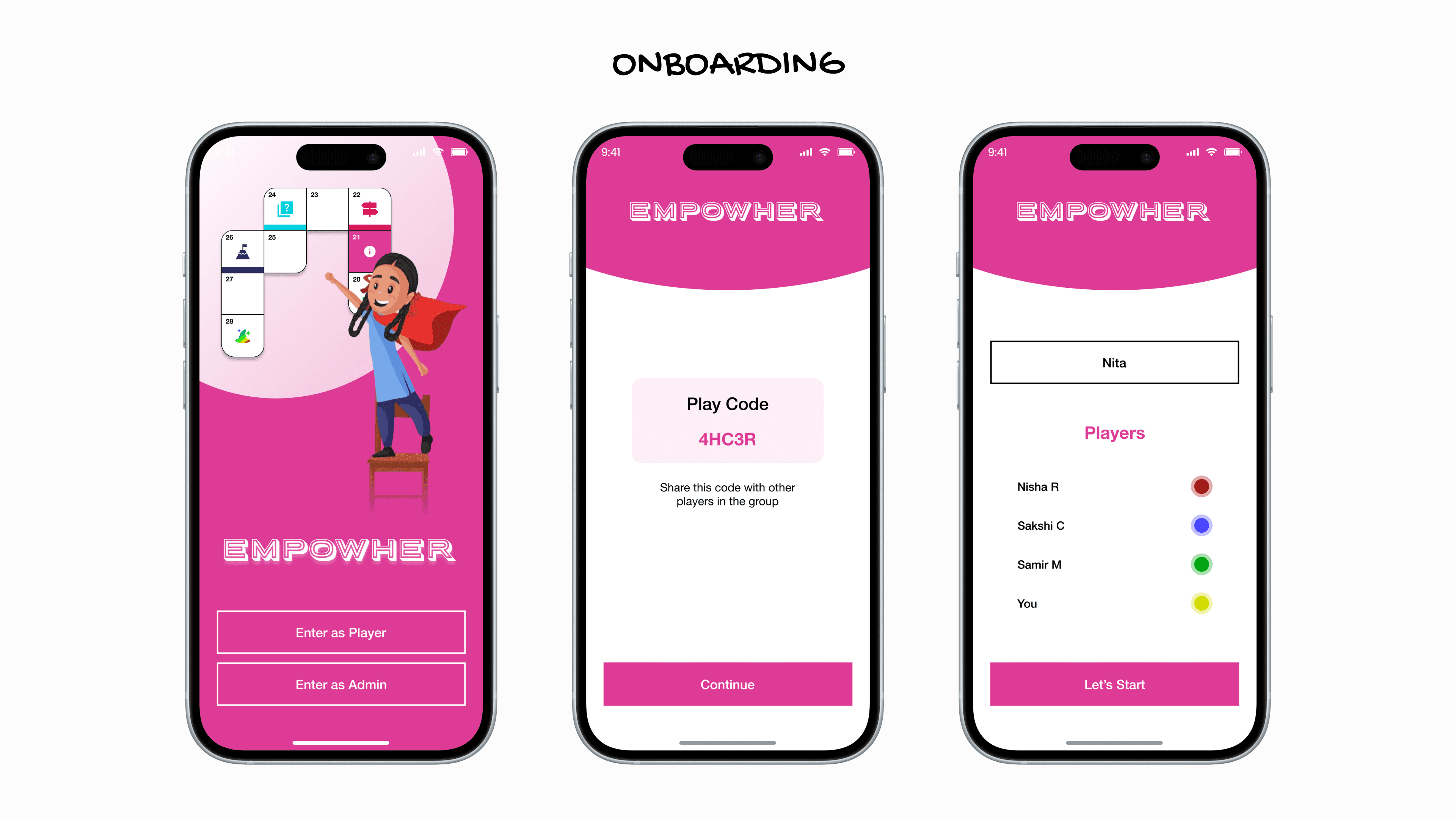
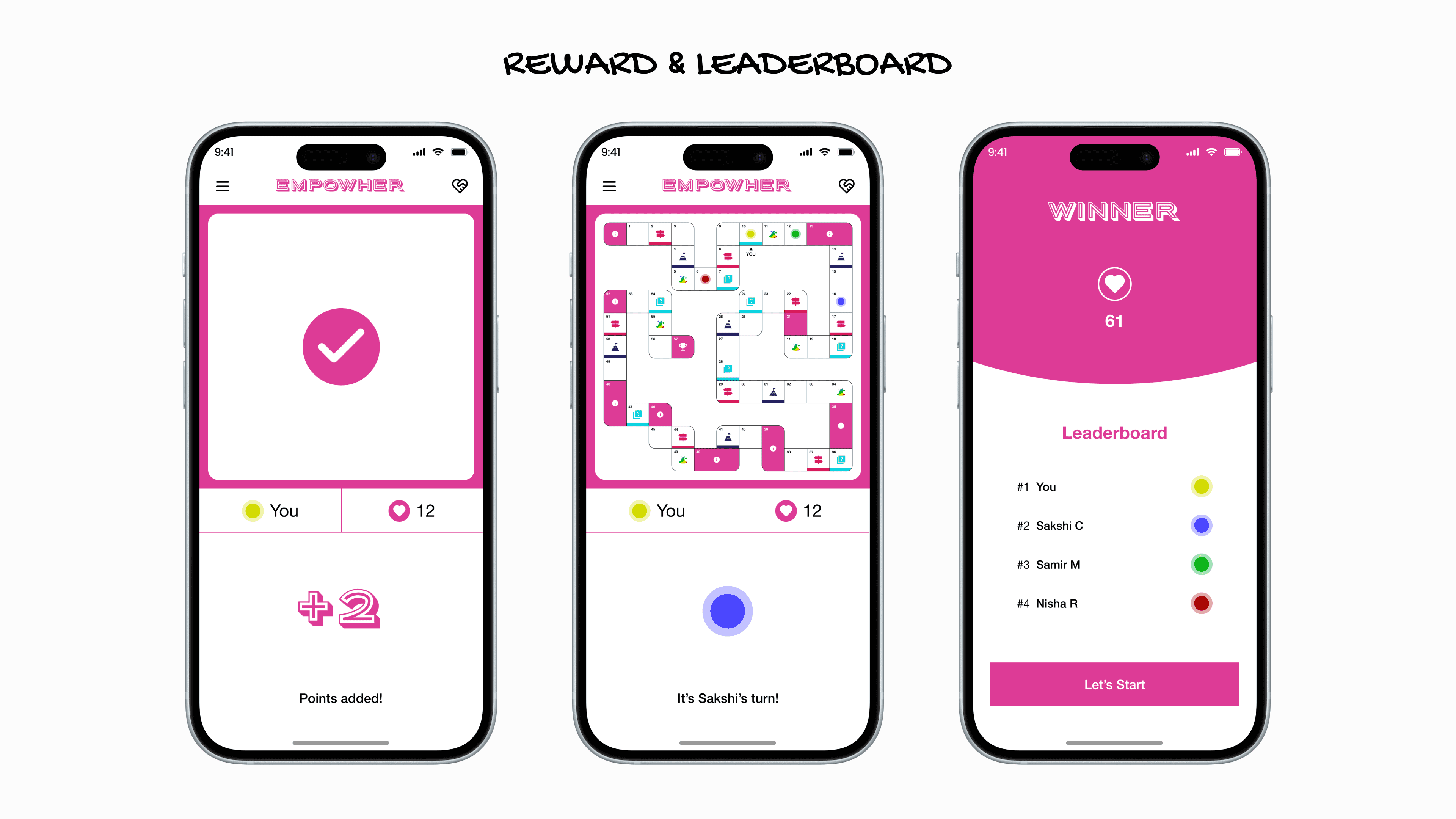
Now going Mobile
A mobile app is in development — bringing the full curriculum to schools and communities across India, with digital gameplay and offline support to overcome connectivity barriers.