
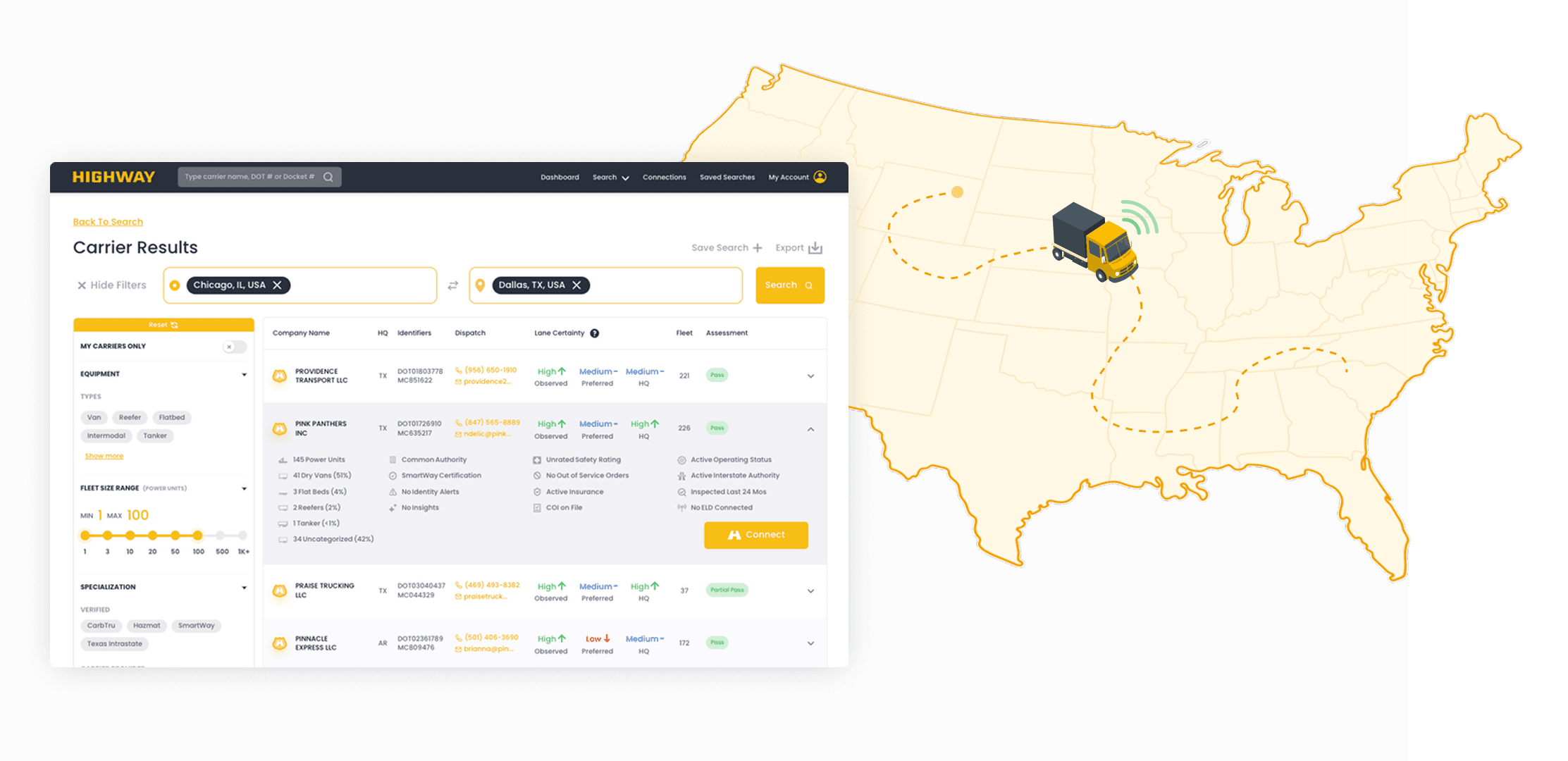
Highway Directory
UX Design
UX Research
B2B Redesign
Redesigning the Highway carrier directory to help freight brokers make faster, more confident decisions without losing the detail they depend on.
Background
Highway is a freight brokerage platform. Brokers use the Directory to vet carriers before booking a load. A bad call isn't a minor mistake; it can cost thousands and end a carrier relationship. The tool built to catch fraud was creating friction instead. The ask was to simplify the directory. Brokers make high-stakes decisions in under 30 seconds. The interface needed to match that pace.
Approach
Instead of redesigning the interface visually, I focused on understanding how brokers evaluate carrier risk. The solution surfaces key decision signals earlier while preserving the depth brokers rely on.
Impact
↑ 9
CSR vetting time — risk indicators surface faster
↓ 30s
targeted changes across 3 challenge areas
↓ 80%
workarounds needed after redesign of in built functionality
Overview
Client: Highway
Timeline: Fall 2024
Tools Used
Sketch, Figma, Usability Testing, Usability Testing,Usability Testing
Role
UX Research, UX & Interaction Design
Methods
Contextual Inquiry, Platform Audit, Usability Testing
Project Context
8 Members, Apprenticeship
Understanding the Problem
Simplify the directory for two very different people.
The directory had one view. The people using it had nothing in common. Compliance Leaders own the vetting decision, they need to be certain. Carrier Sales Reps are confirming a call already half-made, they need to be fast.
The same screen, the same data, completely different jobs.
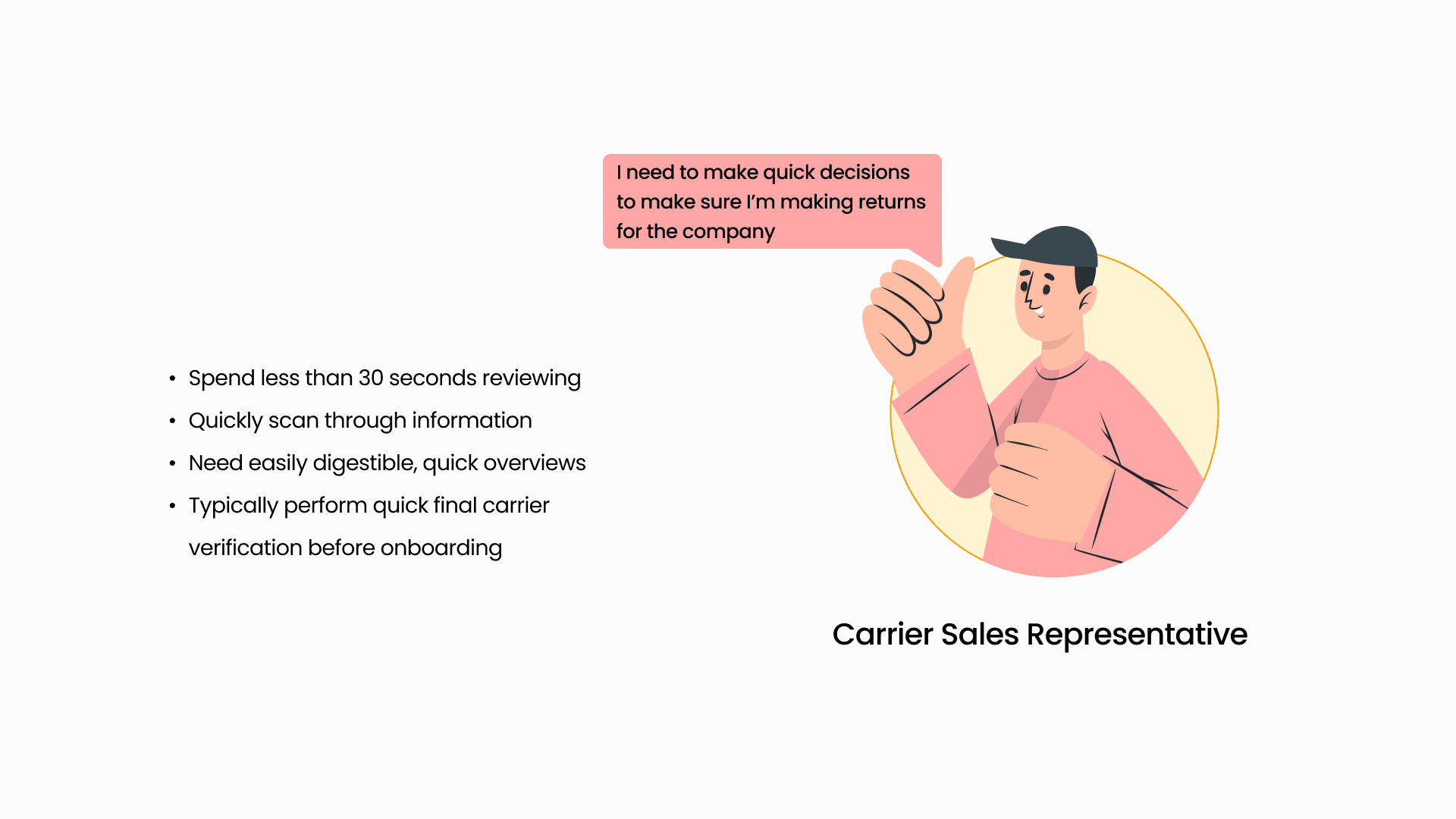
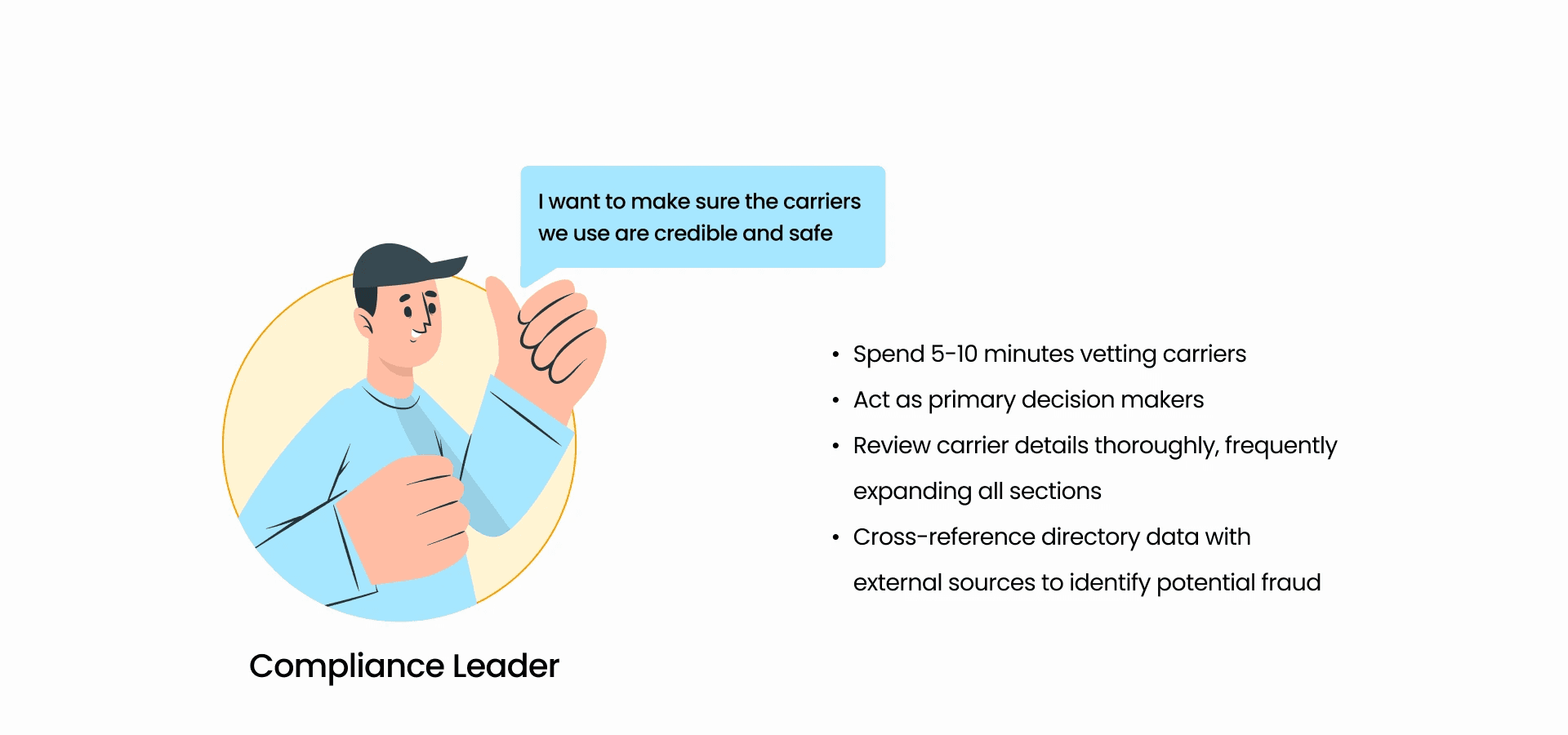
Neither user was wrong about what they needed. The interface just never accounted for the difference. Six contextual inquiries made the focus clear, the directory was where brokers spent the most time, made the most critical decisions, and felt the most friction.
Process
Designing for a decision, not a journey.
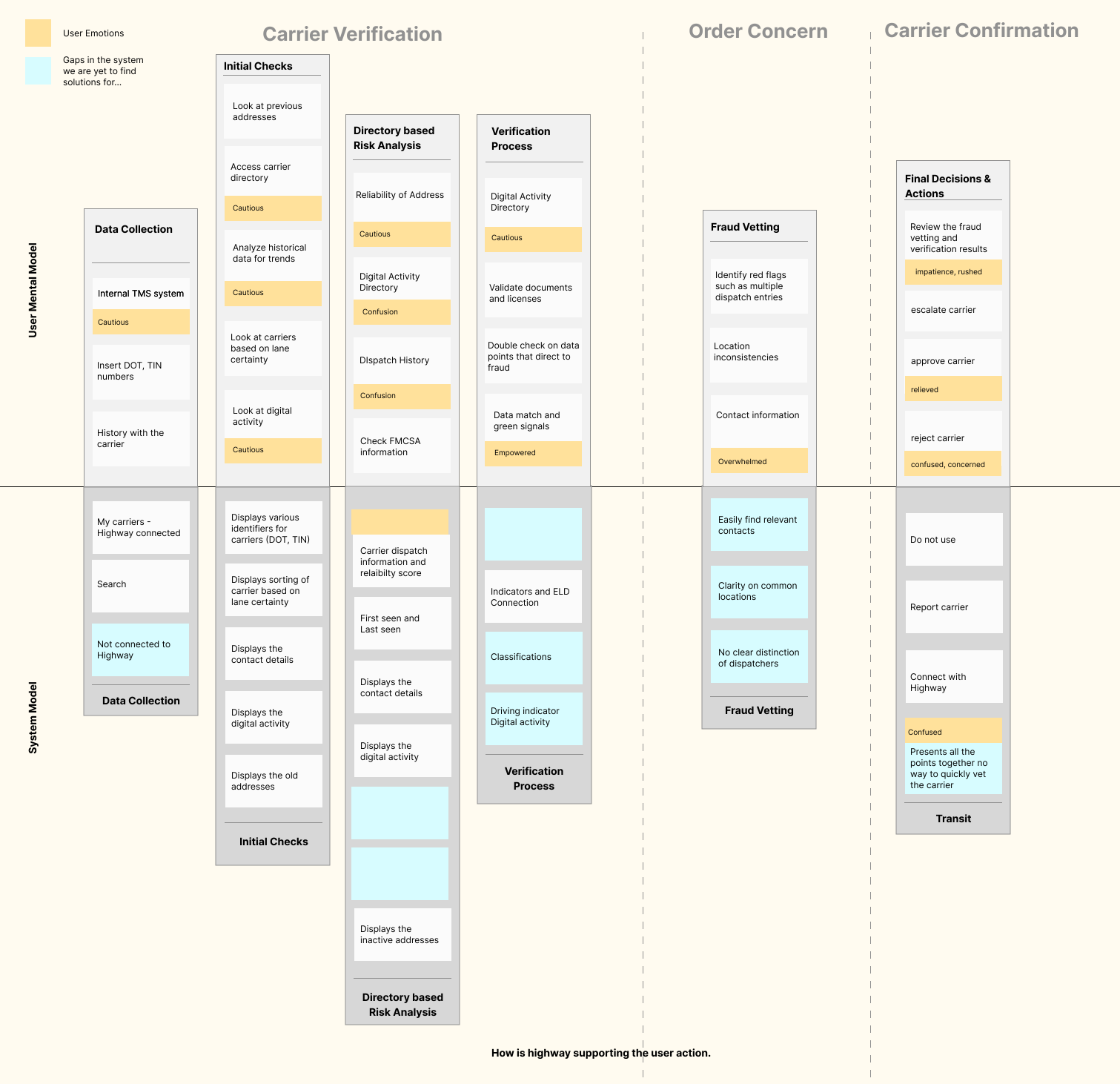
Watching brokers work in real conditions reframed everything. Vetting a carrier isn't a linear flow, it collapses into one high-pressure moment. But the decisions inside that moment follow a consistent pattern across every session: gather data, check for red flags, confirm and act.
Three phases. Carrier Verification → Order Concern → Carrier Confirmation.
I mapped where the system model and the user mental model diverged inside each phase, where Highway was displaying information in the order it was stored, not the order a broker needed it. The yellow blocks are where users felt cautious or confused. Those were our entry points.
Process
What kept breaking — and why?
The mental model showed us that these weren't edge cases, they were patterns. The same three breakdowns showed up regardless of who was vetting or where they were in the workflow. Each one pointed to a specific question we had to answer before we could design anything.
Every data point surfaced at once. No hierarchy, no priority. CSRs stopped looking. CLs couldn't find what mattered.
How do you serve two users at different depths — without building two views?
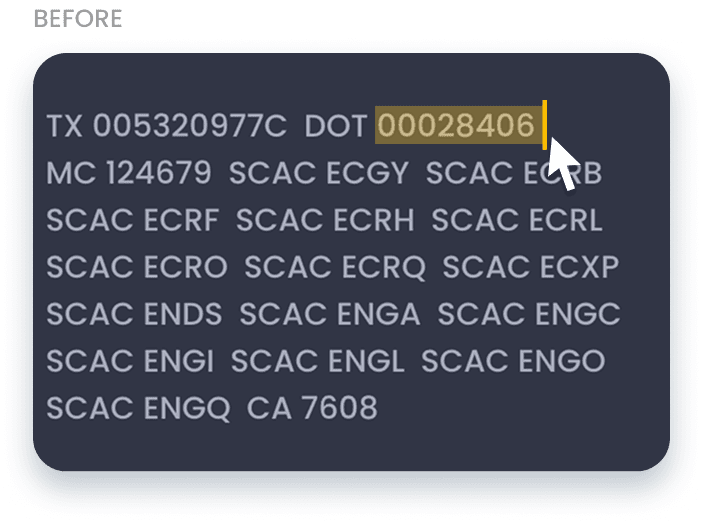
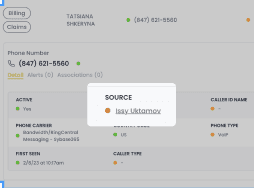
Brokers weren't distrusting contacts. They were distrusting not knowing who added them.
How do you make traceability passive?
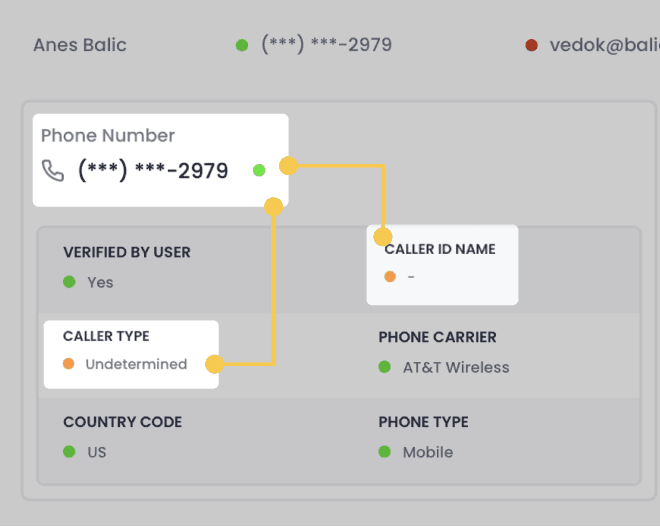
Green meant safe in one field. Flagged in another. The problem wasn't the colors — it was the labels.
How do you make an indicator readable without knowing how the system works?
Solution
Three challenge areas. Nine targeted changes.
Challenge 01 — Information Overload
Progressive disclosure and contact filtering
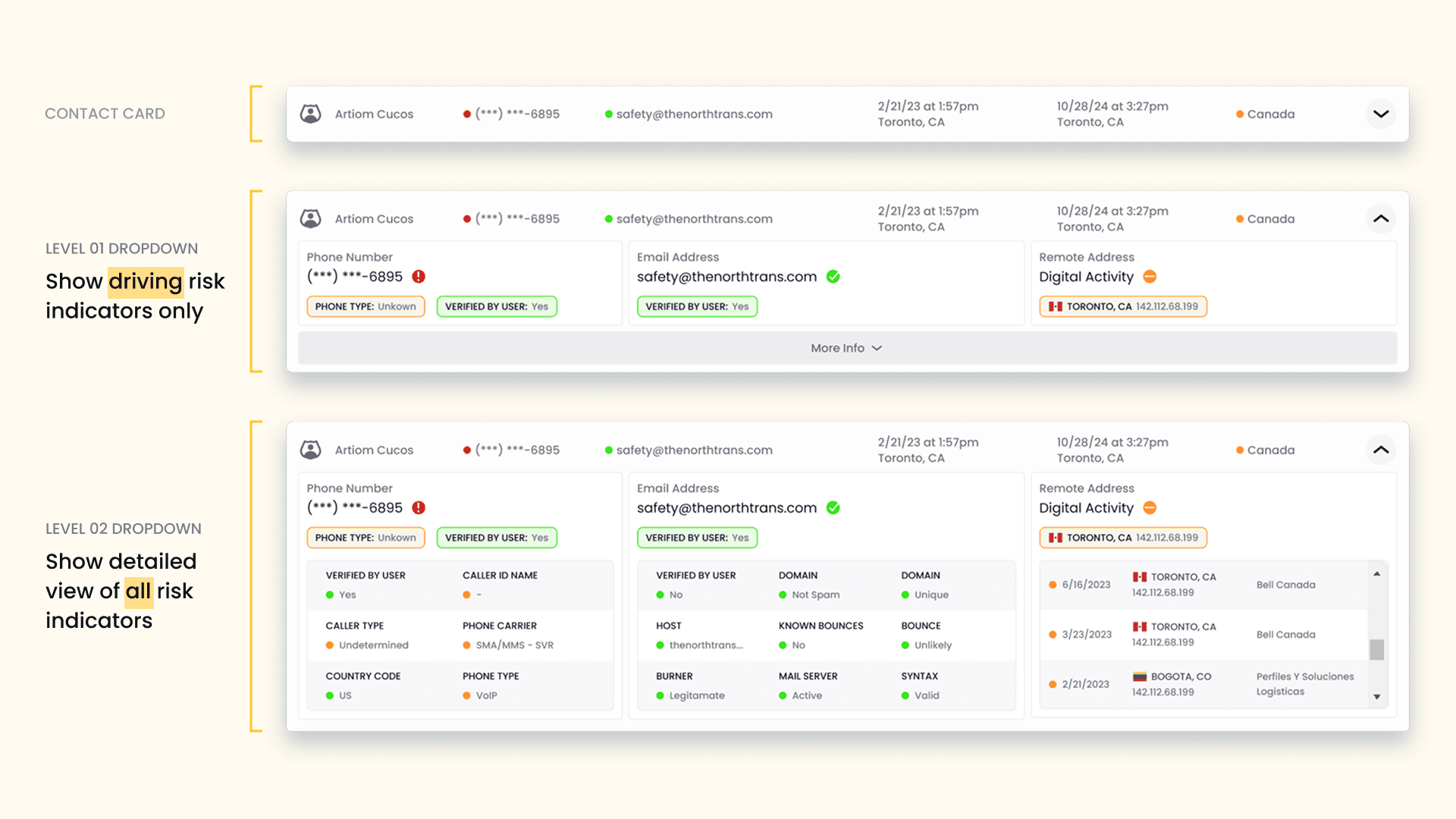
We redesigned risk indicators as a double dropdown. The first level shows only the driving factors — what CSRs need for a quick decision. The second level reveals all sub-data points for CLs who need depth. We also added role-based filter tabs, a search field within the carrier profile, and pagination to the contacts list.
Challenge 02 — Complex Contact Findability
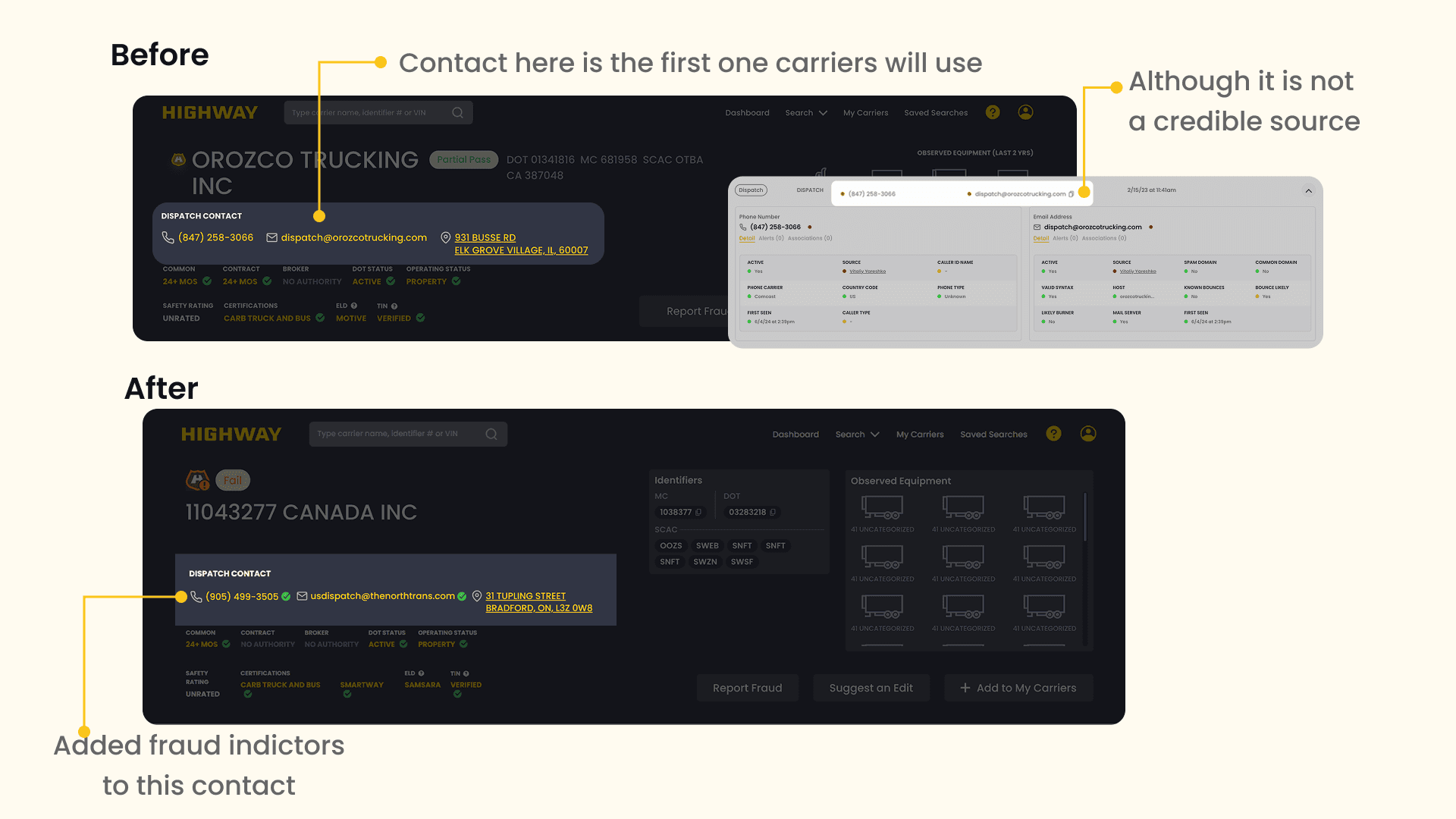
Fraud indicators in the banner. Source tags on contacts.
The dispatch contact in the carrier banner was the first — and often only — contact a broker used. It had no credibility signal. We added verification indicators directly in the banner. We also added an "Uploaded by" tag beneath each contact, so brokers could see instantly who added it and assess reliability without leaving the page.
Challenge 03 — Unclear System Logic
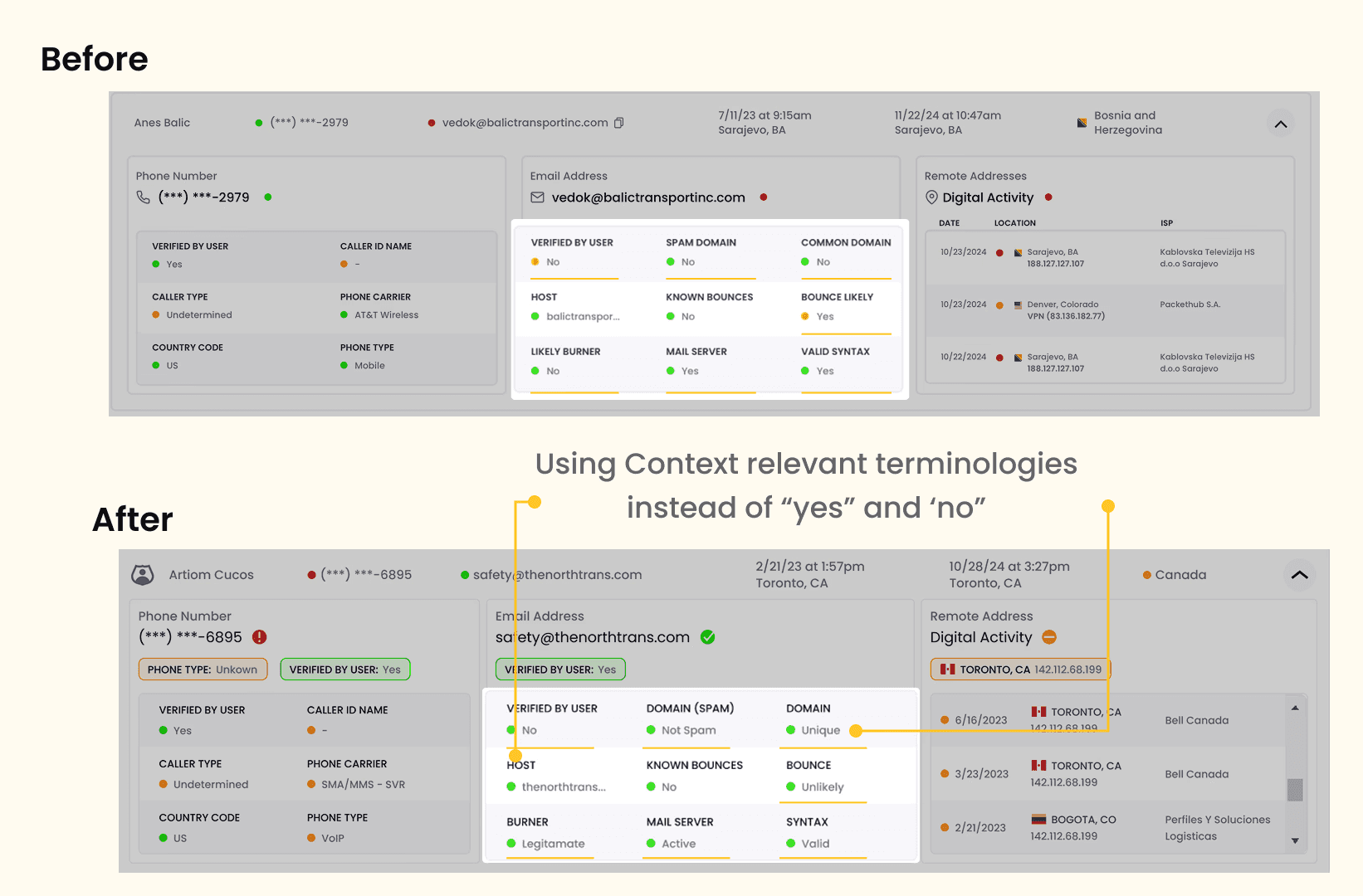
Context-relevant language. Clearer indicators.
We replaced "Yes / No" labels across all risk sub-data points with context-specific terms: "Valid / Invalid" for syntax, "Likely / Unlikely" for bounce rate, "Active / Inactive" for mail servers. We also redesigned the main indicator to be visually distinct from sub-indicators, and surfaced the driving factors at the top of the expanded view.
Impact
↑ 9
CSR vetting time — risk indicators
surface faster
↓ 30s
targeted changes across 3
challenge areas
↓ 80%
workarounds needed after redesign of in built functionality
Learning
01 Scope correction is part of the work
We started broad. Contextual inquiries narrowed us to one section. That shift from redesigning a journey to designing a single decision, is what made the output precise enough to matter.
02 Missing a user costs you a round.
We focused early on Compliance Leaders. When CSRs came in later, they reframed the problem entirely. Both users from day one would have changed how we scoped everything.
03 The best constraints are specific.
Not being able to rebuild the platform forced every decision to be justified by something real. That produced sharper work than open scope would have.
Here is another project I worked on!
Structuring how Google surfaces information to everyday users
Content Strategy
Learning Experience
UX Research
↑ 55%
Engagement with interactive content
↓ 40%
Time to find relevant instructions
↑ 80%
due to task
success rate
Want me to scale your product with you?
Let's chat!